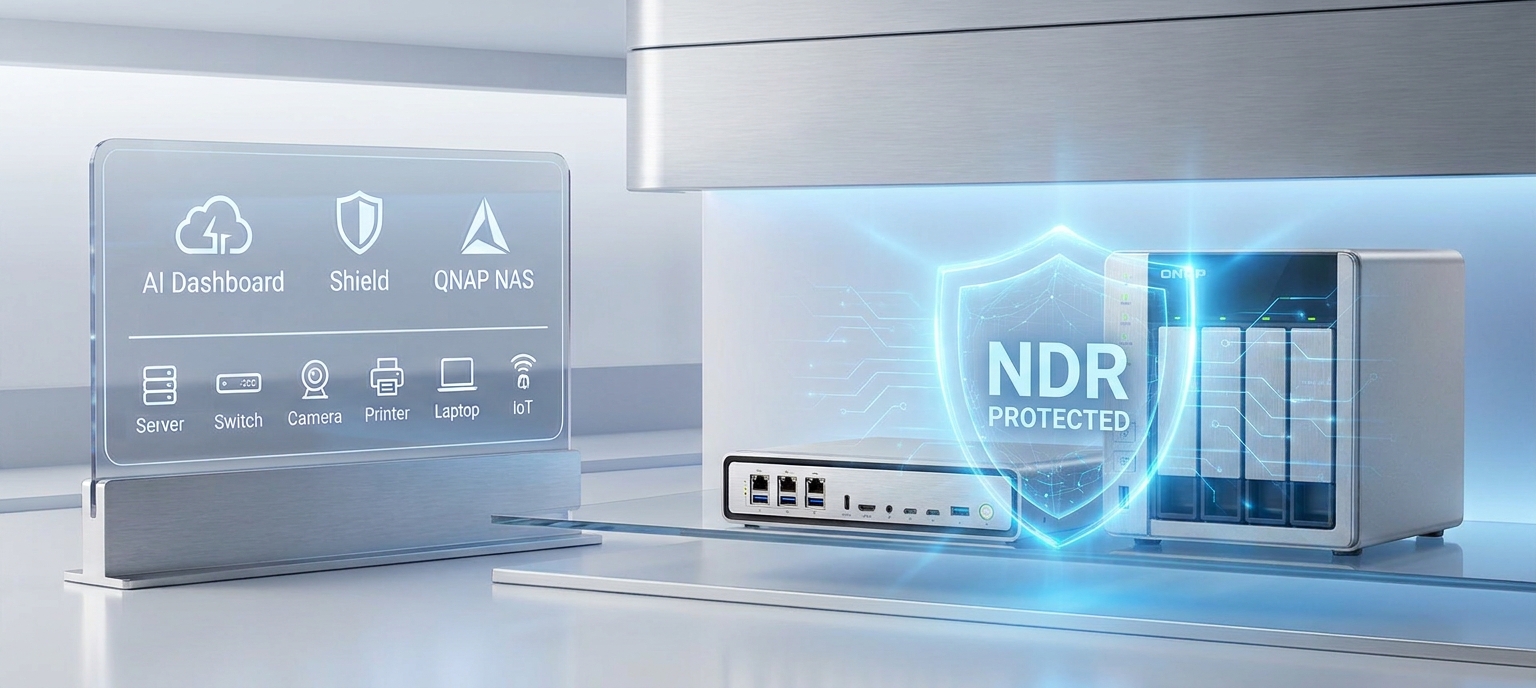
Key Takeaway: Use ADRA NDR X to Defend Against Internal Network Threats and Make Up for What EDR Can't Do
Ransomware software can now bypass EDR (Endpoint Detection and Response), so enterprises need an additional detection mechanism that operates independently from endpoints and directly monitors internal network (LAN) traffic—this is NDR (Network Detection and Response) deployed at the network layer. Even if endpoint protection fails, attackers’ lateral movements will still be visible on the network and can be blocked in real time. QNAP ADRA NDR X enables enterprises to build this network defense chain using existing NAS and compatible switches, allowing proactive internal network detection and isolation. In addition to being license-free, it can also integrate NAS snapshots and 3-2-1-1-0 backups, creating a comprehensive data security solution that links detection, isolation, and recovery.
Cybersecurity company warning: EDR was already shut down before the threat alert was triggered
According to cybersecurity company ESET's 2026 research, around 90 EDR Killer tools have been tracked in the market, among which 54 exploit BYOVD (Bring Your Own Vulnerable Driver) technology to gain system kernel privileges and directly terminate endpoint protection programs.
Behind the statistics of these 90 tools lies a commercialized attack supply chain. ESET further exposed the ransomware-as-a-service (RaaS) group Gentlemen, which provides attackers with an EDR Killer tool called GentleKiller: GentleKiller has at least 8 variants, disguises itself as legitimate software such as Kaspersky and Valorant, and can precisely target more than 48 security products, covering over 400 processes. The toolkit even includes third-party tools like HexKiller, ThrottleBlood, and HavocKiller as substitutes.
What's even more sophisticated is the attack method itself. BYOVD attacks load drivers that are 'legitimately signed but vulnerable.' The operating system allows them, enabling attackers to escalate privileges to kernel level, forcibly terminate EDR engines, log collection, and monitoring services. Throughout the entire process, endpoint protection may not even issue a final alert.
Why Relying Solely on EDR Is Not Enough for Protection
Therefore, this attack exposes not a vulnerability in a single EDR, but rather a structural single point of dependency. Endpoint detection assumes that the agent is still running properly, and the EDR Killer attack specifically targets this assumption. In addition, there are deployments where the agent simply cannot be installed, such as IP cameras, printers, IoTunit devices, legacy systems, external visitor laptops, etc. The conclusion in the U.S. CISA Red Team Exercise Report is quite direct: critical infrastructure organizations being tested are “overly reliant on host-based EDR and lack sufficient network-layer defenses.”
Once EDR is bypassed and there is no corresponding detection mechanism in the intranet, attackers essentially gain unrestricted internal access: lateral movement, scanning other unit, establishing connections, infiltrating and spreading, exfiltrating data, all without anyone noticing.
Therefore, enterprises need to deploy threat detection and response mechanisms at the network layer, such as NDR, to truly block attackers' actions. NDR identifies anomalies by analyzing internal network traffic behavior, without relying on any endpoint agents. Its value lies in being "out-of-band": it does not depend on any potentially compromised host, but observes east-west traffic at the network layer from the switch, comparing abnormal connection behaviors, detecting lateral movement, and suspicious C2 communications. Even if EDR is bypassed by GentleKiller, traces of encrypted activities on the network remain visible.
QNAP ADRA NDR X: Make QNAP NAS the proactive cybersecurity brain
Traditional NDR solutions often mean dedicated hardware plus annual licenses priced by traffic, causing SMBs to back out at the quoting stage. QNAP ADRA NDR X does things differently: users can directly download and install it for free from App Center onto supported QNAP NAS (QTS/QuTS hero 5.2 or above), pair it with a compatible QNAP switch, and instantly upgrade their existing unit to an NDR internal threat detection center—no license fees required.
In the face of the EDR Killer scenario, ADRA NDR X's defense mechanism is divided into three layers:
-
Active Threat Trap (Threat Watch & Trap): Simulates common services such as SSH and SAMBA as honeypots, proactively luring malicious programs exploring the intranet. Selectively encapsulates detection instead of full traffic analysis, ensuring no network slowdown.
-
Lateral movement detection and deep threat analysis: Identifies abnormal intranet connections and unit behaviors, maps threat events to the MITRE ATT&CK® framework, and uses AI event analysis reports to automatically generate event summaries, infection path visualization, and remediation recommendations, so IT staff do not need to read logs one by one.
-
Automatic isolation response: When high-risk unit is detected, it can automatically isolate the unit, providing four levels of protection from “notification only” to automatic lockdown, preventing spread without interrupting the entire network operation.
QNAP ADRA NDR X adopts an agentless design, allowing enterprise IT to deploy quickly without having to install software on every employee's computer. It operates without impacting network performance and does not affect daily operations, ensuring that all connected endpoints unit receive comprehensive security protection. In addition, the solution integrates dual reporting of “single event AI intelligent threat analysis” and “overall internal network security overview,” helping IT staff accurately transform security data into actionable key insights, fully grasp the enterprise's security posture, and respond efficiently in real time.
ADRA NDR X vs EDR Key Comparison
| Comparison Items |
QNAP ADRA NDR X |
EDR |
| Detects data source |
Network packets and suspicious activities of lateral movement within the intranet |
Data from single endpoint deployment |
| Unmanaged unit protection |
Comprehensive coverage. No need to install Agent, fully protects IoT, OT, and BYOD. |
Unable to cover. Unmanaged unit without Agent installation is completely invisible. |
| Resistance to being shut down and anti-tampering capability |
is extremely high. It operates independently from the computer, so even if the computer is infected, it cannot be disabled. |
is relatively weaker. Once elevated privileges are obtained, it is easily shut down by hackers or the Agent is disabled. |
| License fee model |
No license fee. No limit on the number of installations, suitable for unit enterprises with many users. |
Fees are calculated based on the number of endpoints. Charged per device, the more unit you have, the higher the linear cost growth. |
| Deployment and Maintenance Costs |
Low cost, zero disruption. Only need to set up traffic mirroring, no need to access endpoint computers. |
High cost, complex maintenance. Requires deploying software on each device and handling software conflicts and strategy adjustments. |
| Regulatory Compliance (NIST CSF 2.0 / NIS2) |
Compliant. Meets the mandatory requirements for “continuous network monitoring.” |
Requires integration with other tools. Only provides endpoint logs and cannot independently meet network layer compliance. |
The Ultimate Insurance for Data Security: Immutable Snapshots and 3-2-1 Backup
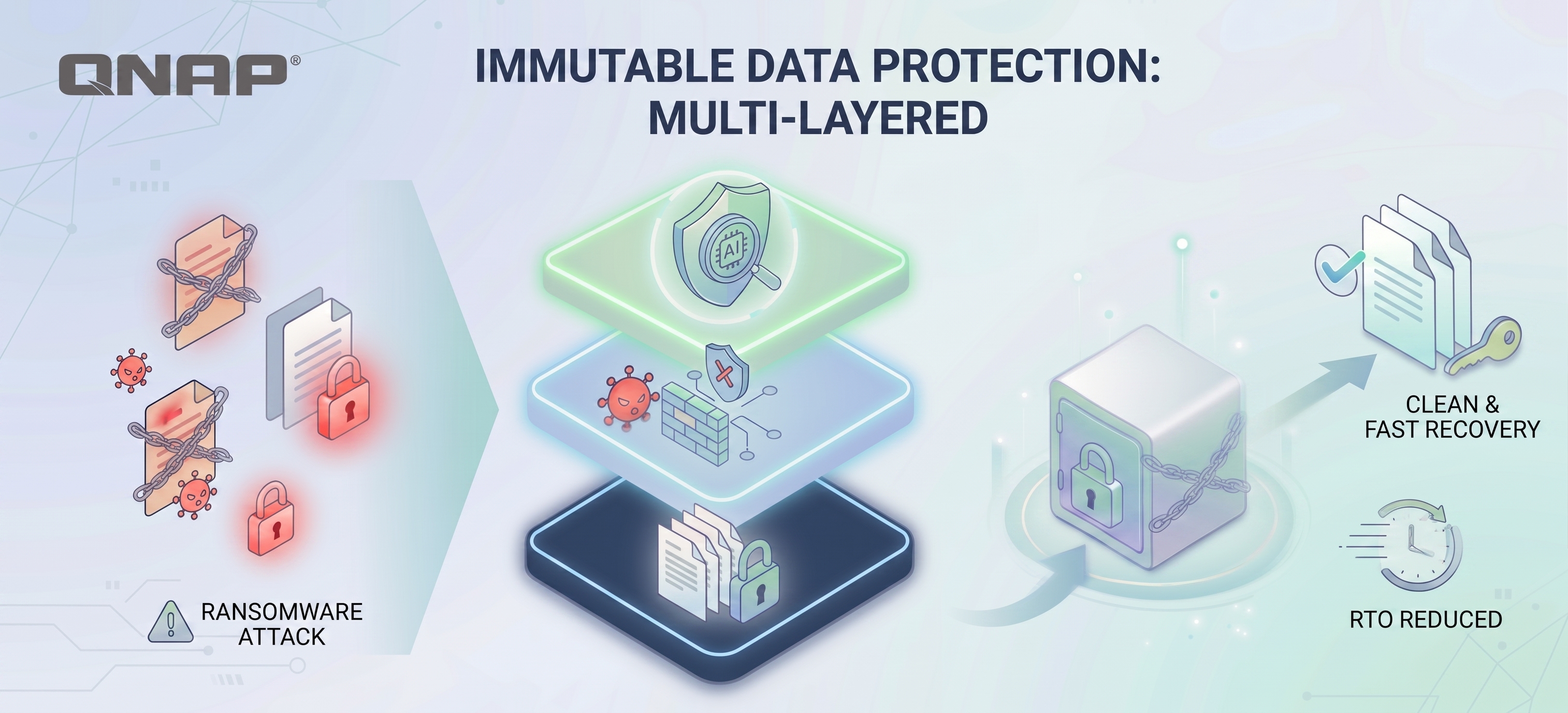
However, enterprises should note that no detection layer can guarantee 100% interception, especially as threats become more complex in the AI era. ADRA NDR X can be integrated with QNAP's NAS snapshot technology to restore data to its intact state before infection after threat isolation. By following the 3-2-1-1-0 backup principle (3 copies of data, 2 types of media, 1 offsite copy, 1 offline/immutable copy, 0 errors), even when facing threats, enterprises can still retain a clean backup that attackers cannot encrypt or tamper with, creating a comprehensive data security solution.
Extension Read more: Ransomware Survival Guide: Why are “Immutability” and “Offline Backup” the last line of defense for enterprises in 2026?
FAQ (FAQ)
What is EDR Killer? Why can't antivirus software block it?
EDR Killer is a specialized attack tool targeting endpoint protection, often leveraging BYOVD technology to load vulnerable drivers with valid signatures, forcibly terminating security software programs after obtaining kernel privileges. Because the drivers are legally signed, operating systems and antivirus engines often treat them as legitimate components and allow them to run.
Already have EDR, do you still need NDR?
Yes, you do. Both cover different stages of the attack chain: EDR excels at blocking execution and persistence on endpoints, while NDR specializes in detecting lateral movement, C2 communications, and data exfiltration. NDR is deployed at the network layer and won't be affected if the main host is shut down, making it a reliable external detection source when EDR is compromised. For example, QNAP is one of the security service providers offering NDR solutions, helping enterprises monitor internal packet and traffic anomalies and precisely block high-risk behaviors and deployments without changing their existing network infrastructure.
Does ADRA NDR X require an additional license?
No. ADRA NDR X can be downloaded for free from App Center and installed on supported QNAP NAS. When used with compatible QNAP switches, there is no need to pay extra license fees.
Viktigt att ta med sig: Använd ADRA NDR X för att försvara mot interna nätverkshot och kompensera för det EDR inte klarar av
Ransomware-programvara kan numera kringgå EDR (Endpoint Detection and Response), vilket innebär att företag behöver en ytterligare detektionsmekanism som är oberoende av endpoints och övervakar intern nätverkstrafik (LAN) direkt—detta är NDR (Network Detection and Response) som placeras på nätverkslagret. Även om skyddet på endpointen misslyckas, kommer angriparens laterala rörelser fortfarande att synas i nätverket och kan blockeras i realtid. QNAP ADRA NDR X gör det möjligt för företag att bygga detta nätverksförsvar med befintlig NAS och kompatibla switchar, vilket möjliggör proaktiv intern nätverksdetektion och isolering. Förutom att vara licensfri kan den även integrera NAS-snapshots och 3-2-1-1-0-backuper, vilket skapar en heltäckande datasäkerhetslösning som kopplar samman detektion, isolering och återställning.
Cybersäkerhetsföretag varnar: EDR var redan avstängd innan hotvarningen utlösts
Enligt cybersäkerhetsföretaget ESET:s forskning från 2026 har cirka 90 EDR Killer-verktyg spårats på marknaden, varav 54 utnyttjar BYOVD-teknik (Bring Your Own Vulnerable Driver) för att få systemkärnans privilegier och direkt avsluta endpoint-skyddsprogram.
Bakom statistiken för dessa 90 verktyg döljer sig en kommersialiserad attackleverantörskedja. ESET avslöjade vidare ransomware-as-a-service (RaaS)-gruppen Gentlemen, som tillhandahåller angripare ett EDR Killer-verktyg kallat GentleKiller: GentleKiller har minst 8 varianter, utger sig för att vara legitim programvara som Kaspersky och Valorant, och kan exakt rikta in sig på över 48 säkerhetsprodukter, vilket täcker över 400 processer. Verktygslådan inkluderar även tredjepartsverktyg som HexKiller, ThrottleBlood och HavocKiller som alternativ.
Det mest sofistikerade är dock själva attackmetoden. BYOVD-attacker laddar drivrutiner som är "legitimt signerade men sårbara". Operativsystemet tillåter dem, vilket gör att angripare kan eskalera privilegier till kärnnivå, tvångsavsluta EDR-motorer, logginsamling och övervakningstjänster. Under hela processen kanske endpoint-skyddet inte ens utfärdar en slutlig varning.
Varför det inte räcker att bara förlita sig på EDR för skydd
Denna attack avslöjar alltså inte en sårbarhet i en enskild EDR, utan snarare en strukturell beroendepunkt. Endpoint-detektion förutsätter att agenten fortfarande körs korrekt, och EDR Killer-attacken riktar sig specifikt mot denna förutsättning. Dessutom finns det miljöer där agenten helt enkelt inte kan installeras, såsom IP-kameror, skrivare, IoT-enheter, äldre system, externa besökares laptops, etc. Slutsatsen i U.S. CISA Red Team Exercise Report är mycket tydlig: kritiska infrastrukturorganisationer som testats är "överdrivet beroende av värdbaserad EDR och saknar tillräckligt nätverkslagerförsvar."
När EDR väl har kringgåtts och det inte finns någon motsvarande detektionsmekanism i det interna nätverket, får angripare i princip obegränsad intern åtkomst: lateral rörelse, skanning av andra enheter, upprättande av anslutningar, infiltration och spridning, dataexfiltrering—allt utan att någon märker det.
Därför behöver företag införa hotdetektion och responsmekanismer på nätverkslagret, såsom NDR, för att verkligen blockera angriparens handlingar. NDR identifierar avvikelser genom att analysera intern nätverkstrafik, utan att förlita sig på någon endpoint-agent. Dess värde ligger i att vara "out-of-band": den är inte beroende av någon potentiellt komprometterad värd, utan observerar öst-väst-trafik på nätverkslagret från switchen, jämför avvikande anslutningsbeteenden, upptäcker lateral rörelse och misstänkt C2-kommunikation. Även om EDR kringgås av GentleKiller, förblir spår av krypterade aktiviteter synliga i nätverket.
QNAP ADRA NDR X: Gör QNAP NAS till den proaktiva cybersäkerhetshjärnan
Traditionella NDR-lösningar innebär ofta dedikerad hårdvara plus årliga licenser baserade på trafikvolym, vilket gör att små och medelstora företag backar redan vid offertstadiet. QNAP ADRA NDR X gör annorlunda: användare kan ladda ner och installera den gratis från App Center på stödd QNAP NAS (QTS/QuTS hero 5.2 eller senare), para ihop den med en kompatibel QNAP-switch och direkt uppgradera sin befintliga enhet till ett NDR-center för intern hotdetektion—utan licensavgifter.
Vid EDR Killer-scenariot är ADRA NDR X:s försvarsmekanism uppdelad i tre lager:
-
Aktivt hotbete (Threat Watch & Trap): Simulerar vanliga tjänster som SSH och SAMBA som honeypots, lockar proaktivt skadliga program som utforskar det interna nätverket. Kapslar selektivt in detektering istället för att analysera all trafik, vilket säkerställer att nätverket inte saktas ner.
-
Detektion av lateral rörelse och djup hotanalys: Identifierar avvikande interna anslutningar och enhetsbeteenden, mappar händelser till MITRE ATT&CK®-ramverket och använder AI-baserade händelserapporter för att automatiskt generera sammanfattningar, visualisering av infekteringsvägar och åtgärdsrekommendationer, så att IT-personal slipper läsa loggar en och en.
-
Automatisk isoleringsrespons: När en högrisk-enhet upptäcks kan den automatiskt isoleras, med fyra skyddsnivåer från "endast notifiering" till automatisk avstängning, vilket förhindrar spridning utan att störa hela nätverksdriften.
QNAP ADRA NDR X har en agentlös design, vilket gör att företags-IT kan implementera snabbt utan att behöva installera programvara på varje anställds dator. Den fungerar utan att påverka nätverksprestandan och stör inte den dagliga verksamheten, vilket säkerställer att alla anslutna endpoints får ett heltäckande skydd. Dessutom integrerar lösningen dubbel rapportering av "AI-intelligent hotanalys för enskilda händelser" och "övergripande intern nätverkssäkerhetsöversikt", vilket hjälper IT-personal att omvandla säkerhetsdata till handlingsbara insikter, få full kontroll över företagets säkerhetsläge och agera effektivt i realtid.
ADRA NDR X vs EDR – Viktiga jämförelser
| Jämförelsepunkt |
QNAP ADRA NDR X |
EDR |
| Upptäcker datakälla |
Nätverkspaket och misstänkta aktiviteter av lateral rörelse i det interna nätverket |
Data från enskild endpoint-installation |
| Skydd av icke-hanterade enheter |
Heltäckande. Ingen agent behövs, skyddar IoT, OT och BYOD fullt ut. |
Kan inte täcka. Icke-hanterade enheter utan agent är helt osynliga. |
| Motståndskraft mot avstängning och manipulation |
är mycket hög. Fungerar oberoende av datorn, så även om datorn infekteras kan den inte stängas av. |
är relativt svagare. När förhöjda privilegier erhålls stängs den lätt av av hackare eller så inaktiveras agenten. |
| Licensmodell |
Ingen licensavgift. Ingen installationsbegränsning, passar företag med många användare. |
Avgift baseras på antal endpoints. Debiteras per enhet, ju fler enheter desto högre linjär kostnadsökning. |
| Drifts- och underhållskostnad |
Låg kostnad, ingen störning. Endast spegling av trafik behöver sättas upp, ingen åtkomst till endpoints krävs. |
Hög kostnad, komplex underhåll. Kräver installation av programvara på varje enhet och hantering av programvarukonflikter och policyjusteringar. |
| Efterlevnad (NIST CSF 2.0 / NIS2) |
Följer kraven. Uppfyller obligatoriska krav på "kontinuerlig nätverksövervakning." |
Kräver integration med andra verktyg. Ger endast endpoint-loggar och kan inte självständigt uppfylla nätverkslagerkrav. |
Den ultimata försäkringen för datasäkerhet: Oföränderliga snapshots och 3-2-1-backup
Företag bör dock notera att inget detektionslager kan garantera 100 % avvärjning, särskilt när hoten blir mer komplexa i AI-eran. ADRA NDR X kan integreras med QNAP:s NAS-snapshot-teknik för att återställa data till dess oskadade tillstånd före infektion efter hotisolering. Genom att följa 3-2-1-1-0-backupprincipen (3 kopior av data, 2 typer av media, 1 extern kopia, 1 offline/oföränderlig kopia, 0 fel) kan företag även vid hot behålla en ren backup som angripare inte kan kryptera eller manipulera, vilket skapar en heltäckande datasäkerhetslösning.
Fördjupad läsning: Ransomware Survival Guide: Varför är "oföränderlighet" och "offline-backup" sista försvarslinjen för företag 2026?
FAQ (Vanliga frågor)
Vad är EDR Killer? Varför kan inte antivirusprogram blockera det?
EDR Killer är ett specialiserat attackverktyg som riktar sig mot endpoint-skydd och utnyttjar ofta BYOVD-teknik för att ladda sårbara drivrutiner med giltiga signaturer, och tvångsavslutar säkerhetsprogram efter att ha fått kärnprivilegier. Eftersom drivrutinerna är lagligt signerade behandlar operativsystem och antivirusmotorer dem ofta som legitima komponenter och tillåter dem att köras.
Har redan EDR, behövs NDR ändå?
Ja, det behövs. Båda täcker olika steg i attackkedjan: EDR är bäst på att blockera körning och persistens på endpoints, medan NDR är specialiserad på att upptäcka lateral rörelse, C2-kommunikation och dataexfiltrering. NDR placeras på nätverkslagret och påverkas inte om huvudvärden stängs av, vilket gör den till en pålitlig extern detektionskälla när EDR är komprometterad. Till exempel är QNAP en av säkerhetsleverantörerna som erbjuder NDR-lösningar och hjälper företag att övervaka interna paket- och trafikavvikelser samt exakt blockera högriskbeteenden och implementationer utan att ändra befintlig nätverksinfrastruktur.
Kräver ADRA NDR X en extra licens?
Nej. ADRA NDR X kan laddas ner gratis från App Center och installeras på stödd QNAP NAS. Vid användning med kompatibla QNAP-switchar behövs ingen extra licensavgift.


 8 minuters läsning