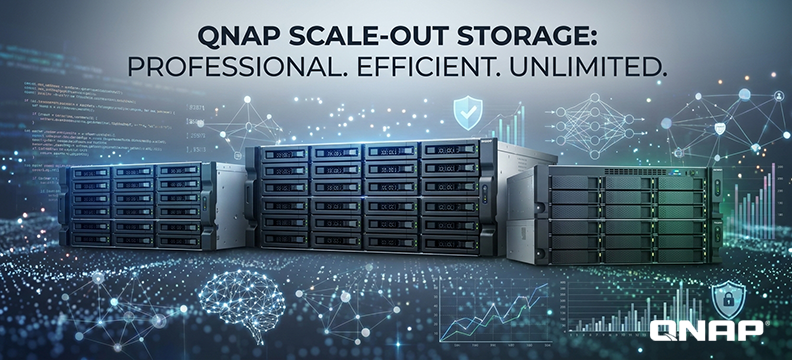
There is an IT financial trap here that many businesses have not yet realized: while ransomware protection is certainly important, regulatory requirements demand that you preserve historical logs and audit files measured in PBs, which is actually the biggest black hole for hard drive budgets. Facing increasingly strict regulations such as the European DORA (Digital Operational Resilience Act, DORA), storing massive amounts of cold data entirely on expensive primary arrays or blindly uploading to public clouds is economically unsustainable. Only through QNAP's Scale-out PB-class storage architecture can businesses build an ultra-compliant, flexible, and ransomware-proof defense line within budget, with scalable expansion as needed.
Regulationdata is like a massive wave attacking, how should enterprise storage architectures respond?
Recently, regulators in the US, UK, Canada, and other countries have once again issued warnings, pointing out that advanced AI models such as Claude Mythos already possess cross-system vulnerability hunting capabilities. This means that when attacks become automated and deeply stealthy, enterprises must achieve 'post-event root cause analysis', which requires retaining massive system log files (Logs), snapshots and historical backups of each node, for a prolonged period of 5 to 7 years of 'absolute retention'.
Faced with the explosive growth of data at the petabyte scale, many enterprises are concerned, because over time, their existing Storage Space will inevitably reach full capacity.
If you want to store all these audit data—which are rarely accessed but legally cannot be deleted—on public clouds like AWS or Azure, the long-term dormant storage costs and the shocking data egress fees will become a financial nightmare. What enterprises truly need is a highly dense, scalable on-premises archive infrastructure that can accommodate unlimited data growth.
QNAP PB-class storage solution: The ultimate scalable on-premises compliance defense
To address the dual challenges of budgeting and compliance, leading enterprises have shifted to highly flexible scale-out architectures. Without impacting the main production system budget, the 'pay-as-you-grow' approach solves the problem, and QNAP enterprise-class storage solutions are designed precisely for this purpose.
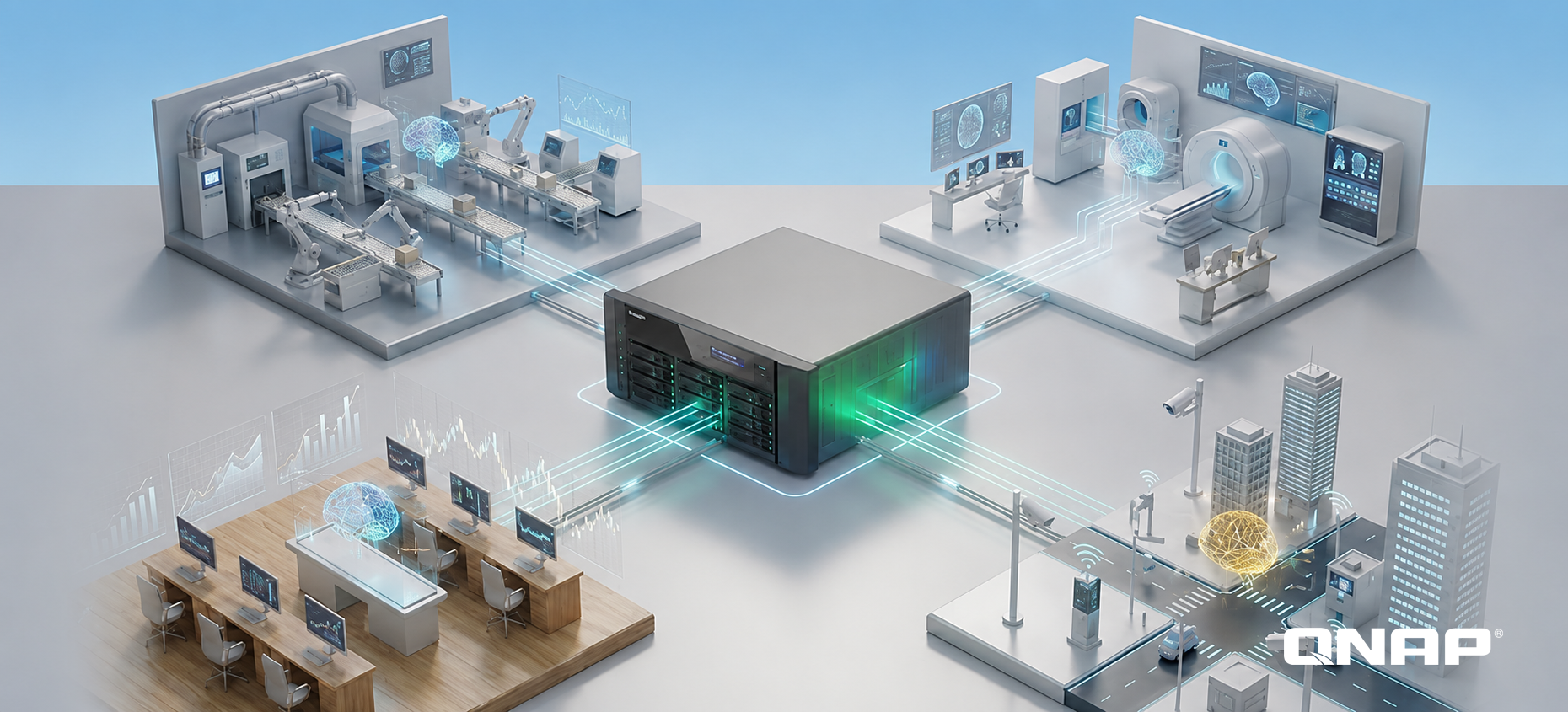
- Break through space limitations with PB-level horizontal scale-out: Facing the explosive growth of data audits driven by AI attacks, traditional storage architectures are no longer practical. QNAP's scale-out storage cluster architecture supports cross-node horizontal expansion, allowing enterprises to easily add storage nodes as data increases. Whether it's hundreds of initial terabyte or ultimately breaking through PB-level historical logs and snapshots, everything can be seamlessly accommodated in the cluster, thoroughly eliminating the physical capacity limits of single hard drives.
- Zero additional License fees: The QuTS hero series based on the ZFS file system supports WORM and immutable snapshot protection mechanisms, helping enterprises comply with regulations.
- Protect your core budget from being compromised: Compared to the bottomless pit of unlimited-term subscription fees for public cloud, QNAP on-premises archive pools with large-capacity HDD offer a significant TCO advantage. This allows IT departments to reserve precious budgets for frontline AI tasks that truly require high-performance computing, rather than being drained by old log files.
| Comparing Items |
Public Cloud Archive (e.g., AWS Glacier) |
QNAP Scale-out NAS Solution |
| Long-term cost structure |
Low initial, high cumulative (OpEx): Increases with data volume and years, with ongoing monthly fees and affected by exchange rate fluctuations. |
Capitalized, high return (CapEx): One-time hardware purchase, cost amortized over time, and retains residual value. |
| data Retrieval Cost |
Extremely Expensive (Fatal): When auditing 1PB of data, the traffic and inspection fees can reach tens of thousands of US dollars. |
Zero Cost: Internal network allows on-demand browsing and tracing at any time, without incurring any additional costs. |
| Flexible Scalability |
On-demand Usage: However, the underlying hardware cannot be controlled, and performance is limited by the cloud provider's resource allocation. |
On-demand Expansion: By adding nodes, efficiency and capacity can be linearly increased, with control in the hands of the enterprise. |
| Compliance protection |
requires additional purchase of locking services (such as Object Lock), and the setup is complex. |
Built-in WORM and immutable snapshots: no extra Licensecost, one-click lock for 7 years of audit data. |
Compliance should not be a stumbling block that hinders enterprise progress. With QNAP's highly scalable architecture and tamper-proof design, enterprises can establish an indestructible defense for an unpredictable future at the most reasonable cost.
Common compliance storage architecture Q&A (FAQ)
Q: What are the differences between Immutable Snapshot and WORM? Will they conflict?
A: No conflict. WORM protects individual files from being tampered with in the “data folder”, while Immutable Snapshot locks the entire “point-in-time state” to prevent malicious deletion. QNAP’s QuTS hero NAS operating system supports enabling both features simultaneously in the same pool, providing dual protection of “content cannot be modified, backup cannot be deleted”, which is the best practice for strict regulations such as DORA or HIPAA.
Learn more: How to set up a WORM shared data folder as an HBS backup destination?
Q: If my compliance data volume (such as logs or surveillance videos) suddenly triples after two years, how should the architecture respond?
A: QNAP provides extremely flexible scalability. In the future, you only need to purchase additional QNAP high-density storage enclosures to seamlessly expand your existing pool, eliminating the downtime risks and time costs of migrating old data to a new host.
Learn more about QNAP PB-level storage solutions
Er is hier een IT-financiële valkuil die veel bedrijven nog niet hebben ingezien: hoewel bescherming tegen ransomware zeker belangrijk is, eisen regelgeving dat je historische logs en auditbestanden bewaart die worden gemeten in PB's, wat eigenlijk het grootste zwarte gat is voor harde schijf-budgetten. Door steeds strengere regels zoals de Europese DORA (Digital Operational Resilience Act, DORA), is het economisch onhoudbaar om enorme hoeveelheden koude data volledig op dure primaire arrays op te slaan of blindelings naar publieke clouds te uploaden. Alleen via QNAP's Scale-out PB-class storage architectuur kunnen bedrijven binnen budget een ultracompliant, flexibele en ransomware-bestendige verdedigingslinie opbouwen, met schaalbare uitbreiding naar behoefte.
Regelgevingdata is als een enorme golf die aanvalt, hoe moeten enterprise storage-architecturen reageren?
Onlangs hebben toezichthouders in de VS, VK, Canada en andere landen opnieuw waarschuwingen afgegeven, waarbij ze aangeven dat geavanceerde AI-modellen zoals Claude Mythos al beschikken over cross-systeem kwetsbaarheidsscanmogelijkheden. Dit betekent dat wanneer aanvallen geautomatiseerd en diepgaand stealthy worden, bedrijven 'post-event root cause analysis' moeten bereiken, wat vereist dat enorme systeemlogbestanden (Logs), snapshots en historische back-ups van elke node worden bewaard, gedurende een lange periode van 5 tot 7 jaar van 'absolute retentie'.
Geconfronteerd met de explosieve groei van data op petabyte-schaal, maken veel bedrijven zich zorgen, want na verloop van tijd zal hun bestaande Storage Space onvermijdelijk de maximale capaciteit bereiken.
Als je al deze auditdata—die zelden worden geraadpleegd maar wettelijk niet mogen worden verwijderd—op publieke clouds zoals AWS of Azure wilt opslaan, zullen de langetermijnkosten voor slapende opslag en de schokkende data-egresskosten een financiële nachtmerrie worden. Wat bedrijven echt nodig hebben is een zeer dense, schaalbare on-premises archiefinfrastructuur die onbeperkte datagroei aankan.
QNAP PB-class storage oplossing: De ultieme schaalbare on-premises compliance verdediging
Om de dubbele uitdagingen van budgettering en compliance aan te pakken, zijn toonaangevende bedrijven overgestapt op zeer flexibele scale-out architecturen. Zonder impact op het budget van het hoofdproductiesysteem lost de 'pay-as-you-grow'-benadering het probleem op, en QNAP enterprise-class storage oplossingen zijn hier precies voor ontworpen.
- Doorbreek ruimtelimieten met PB-niveau horizontale scale-out: Geconfronteerd met de explosieve groei van data-audits door AI-aanvallen, zijn traditionele storage-architecturen niet langer praktisch. QNAP's scale-out storage clusterarchitectuur ondersteunt cross-node horizontale uitbreiding, waardoor bedrijven eenvoudig opslagnodes kunnen toevoegen naarmate data toeneemt. Of het nu gaat om honderden initiële terabytes of uiteindelijk het doorbreken van PB-niveau historische logs en snapshots, alles kan naadloos worden ondergebracht in de cluster, waardoor de fysieke capaciteitslimieten van enkele harde schijven volledig worden geëlimineerd.
- Geen extra licentiekosten: De QuTS hero-serie op basis van het ZFS-bestandssysteem ondersteunt WORM- en onveranderbare snapshotbeschermingsmechanismen, waardoor bedrijven aan regelgeving kunnen voldoen.
- Bescherm je kernbudget tegen uitputting: In vergelijking met de bodemloze put van onbeperkte abonnementsvergoedingen voor publieke cloud, bieden QNAP on-premises archiefpools met grote HDD-capaciteit een aanzienlijk TCO-voordeel. Hierdoor kunnen IT-afdelingen waardevolle budgetten reserveren voor AI-taken aan de frontlinie die echt hoge prestaties vereisen, in plaats van te worden uitgeput door oude logbestanden.
| Vergelijkingsitems |
Public Cloud Archive (bijv. AWS Glacier) |
QNAP Scale-out NAS Oplossing |
| Langetermijnkostenstructuur |
Lage initiële, hoge cumulatieve (OpEx): Neemt toe met datavolume en jaren, met doorlopende maandelijkse kosten en beïnvloed door wisselkoersschommelingen. |
Gekapitaliseerd, hoog rendement (CapEx): Eenmalige hardwareaankoop, kosten worden over tijd afgeschreven en behouden restwaarde. |
| data Retrieval Cost |
Extreem duur (Fataal): Bij het auditen van 1PB data kunnen de verkeers- en inspectiekosten oplopen tot tienduizenden Amerikaanse dollars. |
Geen kosten: Intern netwerk maakt on-demand browsen en traceren op elk moment mogelijk, zonder extra kosten. |
| Flexibele schaalbaarheid |
Gebruik op aanvraag: De onderliggende hardware kan echter niet worden beheerd en prestaties zijn beperkt door de resourceallocatie van de cloudprovider. |
Uitbreiding op aanvraag: Door nodes toe te voegen kunnen efficiëntie en capaciteit lineair worden verhoogd, met controle in handen van het bedrijf. |
| Compliance bescherming |
vereist extra aankoop van locking services (zoals Object Lock), en de setup is complex. |
Ingebouwde WORM en onveranderbare snapshots: geen extra licentiekosten, met één klik 7 jaar auditdata vergrendelen. |
Compliance mag geen struikelblok zijn dat de vooruitgang van bedrijven belemmert. Met QNAP's zeer schaalbare architectuur en tamper-proof ontwerp kunnen bedrijven tegen de meest redelijke kosten een onverslaanbare verdediging opbouwen voor een onvoorspelbare toekomst.
Veelgestelde vragen over compliance storage architectuur (FAQ)
Q: Wat zijn de verschillen tussen Immutable Snapshot en WORM? Zullen ze conflicteren?
A: Geen conflict. WORM beschermt individuele bestanden tegen manipulatie in de “data folder”, terwijl Immutable Snapshot de gehele “point-in-time state” vergrendelt om kwaadwillige verwijdering te voorkomen. Het QuTS hero NAS-besturingssysteem van QNAP ondersteunt het gelijktijdig inschakelen van beide functies in dezelfde pool, waardoor dubbele bescherming wordt geboden van “inhoud kan niet worden gewijzigd, back-up kan niet worden verwijderd”, wat de best practice is voor strenge regelgeving zoals DORA of HIPAA.
Meer informatie: Hoe stel je een WORM gedeelde datafolder in als HBS-back-upbestemming?
Q: Als mijn compliance datavolume (zoals logs of bewakingsvideo's) na twee jaar plotseling verdrievoudigt, hoe moet de architectuur reageren?
A: QNAP biedt extreem flexibele schaalbaarheid. In de toekomst hoef je alleen maar extra QNAP high-density storage behuizingen aan te schaffen om je bestaande pool naadloos uit te breiden, waardoor de risico's van downtime en tijdskosten bij het migreren van oude data naar een nieuwe host worden geëlimineerd.
Meer informatie over QNAP PB-level storage oplossingen


 5 min lezen