What Is Edge AI?
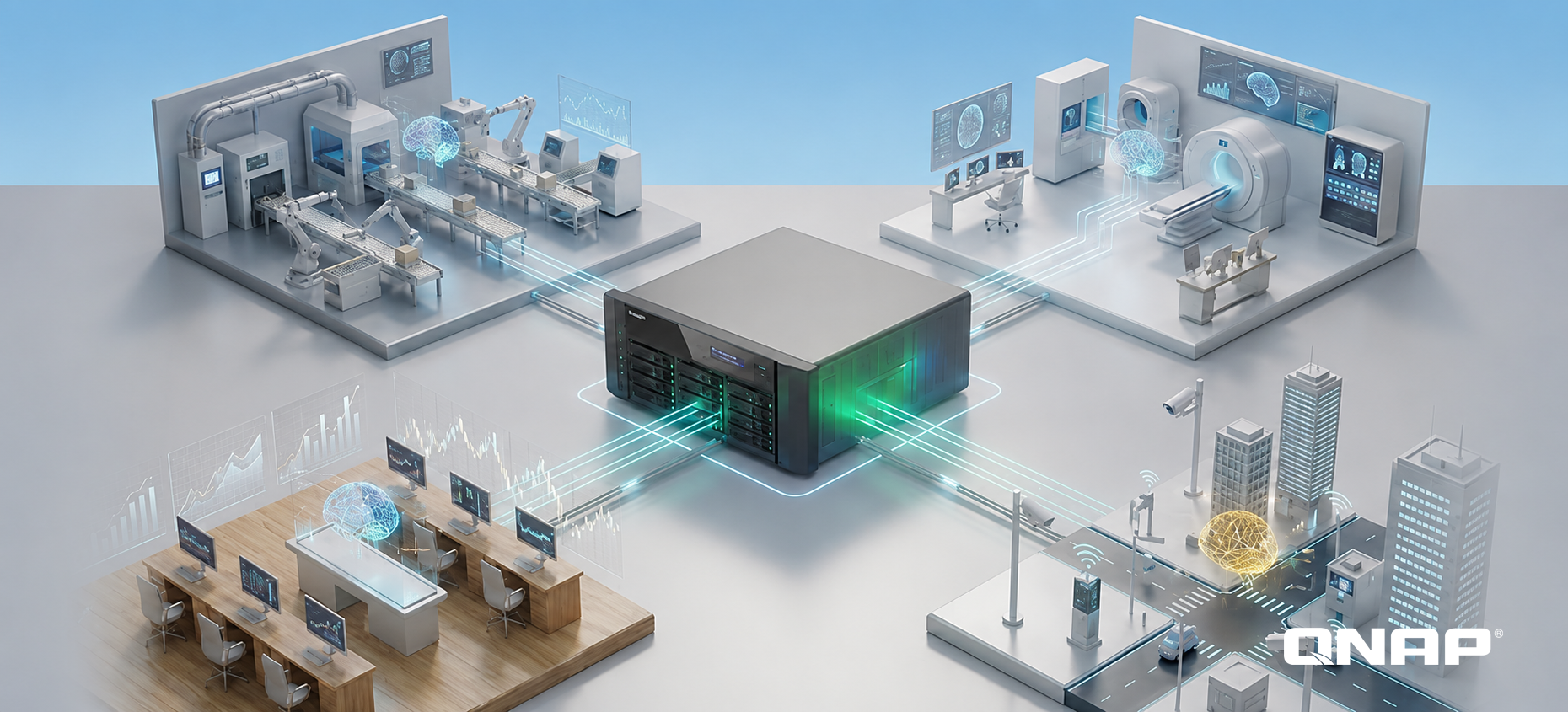
Wondering what Edge AI actually means for your business? Edge AI runs AI inference on local hardware — a factory server, a data center, even a NAS — instead of sending data to the cloud. Here's why 2026 became the year enterprises started bringing AI on-prem.
By 2026, Edge AI will gradually become the standard infrastructure for sensitive industries such as manufacturing, healthcare, and finance that rely on data. In addition to the fact that the cost of cloud inference is approaching the threshold for self-built solutions, the ongoing privacy issues are also making enterprises increasingly aware of the importance of local AI.
According to the latest guidelines released by IDC in March 2026, global edge computing has officially entered a new stage fully driven by “Edge AI” and “Physical AI.” Enterprises are no longer just sending data back to the cloud, but are leveraging on-site chips for real-time intelligent analysis. IDC points out that understanding and deploying edge AI infrastructure has become the key to survival for CIOs in all industries in 2026, ensuring data security and real-time decision-making.
COMPUTEX 2026: Why Edge AI Took Center Stage
At the world-renowned COMPUTEX 2026 exhibition, QNAP also showcased multiple Edge AI NAS solutions. Among them, the QAI-h1290FX equipped with an AMD EPYC™ processor and supporting NVIDIA® RTX™ PRO Blackwell GPU demonstrated various AI applications: from on-premises LLM, enterprise private AI knowledge base construction, to unified management of virtual machine and containerized AI applications. QNAP comprehensively presented real-world Edge AI application scenarios in enterprise environments, as well as the cost, management, and low-latency advantages of integrating Edge AI NAS with datastorage and AI computing in a single device.
This also signals a clear message to the market: the conditions for bringing AI inference back on-premises are gradually maturing. Enterprises no longer need to “wait until cloud AI becomes affordable enough to accept” before deploying AI; instead, they are now starting to consider Edge AI.
The direction of Edge AI is such that even other hardware giants are releasing public white papers. Qualcomm CEO Cristiano Amon said in a Fortune interview in May 2026: “Robotics is an edge AI problem, like a car is an edge AI problem.” From robots to self-driving cars, any scenario in the future that requires real-time response and cannot wait for round-trips to the cloud will become a main battlefield for Edge AI.
Why Cloud AI Costs Are Driving On-Prem AI Inference
Currently, enterprise AI usage mainly falls into two stages: training and inference. Training requires short-term bursts of computing power, so public cloud remains the mainstream choice; however, inference typically runs 24/7, every day and every hour. In this scenario, costs are accumulated based on the number of tokens or API calls, making the final cost quite significant.
According to industry observations, when the cumulative rental cost of cloud APIs approaches about 60–70% of the on-premises self-built equivalent computing cost, enterprises will begin to seriously calculate the ROI of “bringing AI back home.” For high-frequency inference scenarios such as manufacturing production lines, real-time retail analysis, and medical imaging recognition, this inflection point arrives faster than expected.
Another source of pressure comes from regulations: the EU's GDPR and financial industry cybersecurity compliance standards mean that every time you "upload customer data and financial data to external AI servers," a compliance risk assessment must be attached.
With both pressures tightening at the same time, the Edge AI market is also maturing more rapidly.
How Does Edge AI Work?
The definition of Edge AI itself is not complicated: it means performing AI inference directly on local unit or servers near the data source, rather than sending data to a remote cloud data center for processing.
“Edge” refers to the network’s extended location—the computing node closest to the endpoint, as opposed to the remote “Cloud Core.” An AI inference server at a factory site or an AI NAS in an enterprise data center are both carriers of Edge AI.
Besides cost and compliance, Edge AI also solves a problem that cloud architectures inherently cannot—latency. In factory AOI defect detection and real-time image analysis, millisecond-level response is required. When this expands to scenarios like robotics and autonomous vehicles, if data has to go back and forth to the cloud, the result may not return in time and the production line has already moved on. This is a problem of physical distance; no matter how affordable the cloud API is, it can't make up for the time lost to the speed of light barrier.
Therefore, the emergence of Edge AI is not meant to replace Cloud AI. AI training is still best suited for the explosive computing power of the cloud, and general-purpose cloud AI continues to be widely used. Most enterprises are taking a hybrid approach, where cloud computing is not completely discontinued, but edge computing is adopted in suitable scenarios, and even enterprise-specific AI is customized on edge computing unit.
How does QNAP truly implement Edge AI?
Edge inference requires more than just computing power—it needs computing power, storage, networking, and a management interface all residing on one machine; otherwise, “on-premises AI” is just another new IT-maintained silo.
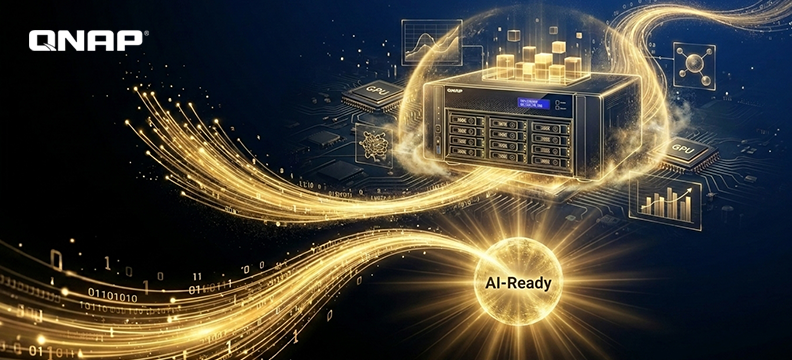
The design concept of QAI-h1290FX starts here. 12-bay NVMe all-flash storage, AMD EPYC™ multi-core processor, support for NVIDIA® RTX™ PRO Blackwell GPU expansion, combined with QuTS hero (ZFS-based operating system) and Container Station, it addresses the issue of “integration,” not just computing power:
- On-premises LLM inference: Speed reaches 100+ tokens/sec, the entire inference process is completed in the server room, enterprise data does not go through any external servers, ensuring high speed and security.
- Enterprise private AI knowledge base: Using RAG (Retrieval-Augmented Generation) to turn internal documents into AI that can answer questions, accurately extracting internal knowledge; financial reports, contracts, and SOPs never go to the cloud, ensuring compliance and internal control.
- Unified management of virtualization + containers: AI applications and existing IT workloads can run on the same machine, no need to open another unit, saving on new purchases and making management easier.
FAQ
Edge AI vs Cloud AI: What's the Difference?
Cloud AI is based on data-centered inference in the cloud, where enterprises may have privacy concerns; Edge AI is based on local unit inference, giving enterprises full control over data. Most enterprises adopt a hybrid architecture: using the cloud for training and edge devices for inference.
What is the difference between NPU and GPU?
NPU (Neural Processing Unit, neural network processing unit) is optimized for matrix multiplication, with power consumption far lower than a GPU, making it suitable for 24/7 continuous lightweight inference (such as image recognition and vector embedding). GPUs are powerful but consume more power, making them suitable for running complete LLMs or training tasks. Many QNAP NAS models have a built-in NPU, allowing daily AI workloads without extra power consumption.
When should enterprises consider Edge AI ?
If two or more of the following three conditions are met, it is worth evaluating: data involves privacy or regulatory restrictions, high AI inference frequency leads to continuous cloud costs, or business scenarios are sensitive to latency (such as real-time production line analysis, medical imaging, or customer service conversations).
Conclusion
Edge AI is not a watered-down version of AI; it’s the first time AI truly moves into your own machine room. By 2026, hardware barriers will no longer be an issue—the real question is, when will your AI inference bill make you start calculating the cost?
For most enterprises, the future is not about choosing between Edge AI and Cloud AI. Instead, it is a hybrid architecture that combines cloud training with on-prem AI inference, allowing organizations to balance scalability, data privacy, cost efficiency, and real-time performance.
Learn more about the complete QNAP Edge AI Storage Server solution: QNAP Edge AI Storage Server.
Wat is Edge AI?
Benieuwd wat Edge AI eigenlijk betekent voor jouw bedrijf? Edge AI voert AI-inferentie uit op lokale hardware — een fabriekserver, een datacenter, zelfs een NAS — in plaats van data naar de cloud te sturen. Dit is waarom 2026 het jaar werd waarin bedrijven AI on-premises gingen inzetten.
Tegen 2026 zal Edge AI geleidelijk de standaardinfrastructuur worden voor gevoelige sectoren zoals productie, gezondheidszorg en financiën die afhankelijk zijn van data. Naast het feit dat de kosten van cloud-inferentie de drempel voor zelfgebouwde oplossingen naderen, zorgen aanhoudende privacykwesties ervoor dat bedrijven zich steeds bewuster worden van het belang van lokale AI.
Volgens de nieuwste richtlijnen van IDC die in maart 2026 zijn uitgebracht, is wereldwijde edge computing officieel een nieuw tijdperk ingegaan dat volledig wordt aangedreven door “Edge AI” en “Physical AI”. Bedrijven sturen niet langer alleen data terug naar de cloud, maar benutten on-site chips voor realtime intelligente analyse. IDC benadrukt dat het begrijpen en implementeren van edge AI-infrastructuur in 2026 de sleutel tot overleving is voor CIO’s in alle sectoren, om dataveiligheid en realtime besluitvorming te waarborgen.
COMPUTEX 2026: Waarom Edge AI centraal stond
Op de wereldberoemde COMPUTEX 2026-beurs presenteerde QNAP ook meerdere Edge AI NAS-oplossingen. Daaronder toonde de QAI-h1290FX met een AMD EPYC™-processor en ondersteuning voor NVIDIA® RTX™ PRO Blackwell GPU diverse AI-toepassingen: van on-premises LLM, de bouw van een private AI-kennisbank voor bedrijven, tot het centraal beheren van virtuele machines en containerized AI-applicaties. QNAP presenteerde uitgebreid realistische Edge AI-toepassingsscenario’s in bedrijfsomgevingen, evenals de voordelen qua kosten, beheer en lage latency van het integreren van Edge AI NAS met datastorage en AI-computing in één apparaat.
Dit geeft ook een duidelijke boodschap aan de markt: de voorwaarden om AI-inferentie terug on-premises te brengen, rijpen geleidelijk. Bedrijven hoeven niet langer “te wachten tot cloud AI betaalbaar genoeg is” voordat ze AI implementeren; ze beginnen nu Edge AI te overwegen.
De richting van Edge AI is zodanig dat zelfs andere hardwaregiganten publieke whitepapers uitbrengen. Qualcomm CEO Cristiano Amon zei in een Fortune-interview in mei 2026: “Robotica is een edge AI-probleem, net zoals een auto een edge AI-probleem is.” Van robots tot zelfrijdende auto’s: elk scenario dat in de toekomst realtime respons vereist en niet kan wachten op een round-trip naar de cloud, wordt een belangrijk strijdtoneel voor Edge AI.
Waarom cloud AI-kosten on-prem AI-inferentie stimuleren
Momenteel valt het gebruik van AI door bedrijven vooral uiteen in twee fasen: training en inferentie. Training vereist korte pieken in rekenkracht, waardoor de publieke cloud de gangbare keuze blijft; inferentie daarentegen draait meestal 24/7, elke dag en elk uur. In dit scenario worden de kosten opgebouwd op basis van het aantal tokens of API-calls, waardoor de uiteindelijke kosten aanzienlijk kunnen zijn.
Volgens brancheobservaties, wanneer de cumulatieve huurkosten van cloud-API’s ongeveer 60–70% van de on-premises zelfgebouwde equivalente rekenkosten benaderen, beginnen bedrijven serieus de ROI van “AI terug naar huis halen” te berekenen. Voor high-frequency inferentie zoals productielijnen, realtime retailanalyse en medische beeldherkenning, komt dit omslagpunt sneller dan verwacht.
Een andere druk komt van regelgeving: de GDPR van de EU en cybersecurity compliance-standaarden in de financiële sector betekenen dat elke keer dat je "klantdata en financiële data uploadt naar externe AI-servers", er een compliance-risicobeoordeling moet worden toegevoegd.
Met beide drukpunten die tegelijkertijd toenemen, rijpt de Edge AI-markt ook sneller.
Hoe werkt Edge AI?
De definitie van Edge AI is op zich niet ingewikkeld: het betekent AI-inferentie direct uitvoeren op lokale units of servers dicht bij de databron, in plaats van data naar een remote cloud datacenter te sturen voor verwerking.
“Edge” verwijst naar de uitgebreide locatie van het netwerk — het rekenknooppunt dat het dichtst bij het eindpunt ligt, tegenover de remote “Cloud Core”. Een AI-inferentieserver op een fabrieksterrein of een AI NAS in een bedrijfsdatacenter zijn beide dragers van Edge AI.
Naast kosten en compliance lost Edge AI ook een probleem op dat cloudarchitecturen inherent niet kunnen — latency. Bij AOI-defectdetectie in fabrieken en realtime beeldanalyse is milliseconde-respons vereist. Wanneer dit uitbreidt naar robotica en autonome voertuigen, als data heen en weer naar de cloud moet, komt het resultaat mogelijk niet op tijd terug en is de productielijn al verder. Dit is een probleem van fysieke afstand; hoe betaalbaar de cloud-API ook is, het kan de tijd die verloren gaat door de lichtsnelheidsbarrière niet compenseren.
Daarom is Edge AI niet bedoeld om Cloud AI te vervangen. AI-training blijft het beste geschikt voor de explosieve rekenkracht van de cloud, en algemene cloud AI blijft breed ingezet. De meeste bedrijven kiezen voor een hybride aanpak, waarbij cloud computing niet volledig wordt stopgezet, maar edge computing wordt toegepast in geschikte scenario’s, en zelfs bedrijfsspecifieke AI wordt aangepast op edge computing units.
Hoe implementeert QNAP Edge AI echt?
Edge-inferentie vereist meer dan alleen rekenkracht — het heeft rekenkracht, opslag, netwerk en een beheerinterface nodig, allemaal op één machine; anders is “on-premises AI” gewoon weer een nieuw IT-silo dat beheerd moet worden.
Het ontwerpconcept van QAI-h1290FX begint hier. 12-bay NVMe all-flash opslag, AMD EPYC™ multi-core processor, ondersteuning voor NVIDIA® RTX™ PRO Blackwell GPU-uitbreiding, gecombineerd met QuTS hero (ZFS-gebaseerd besturingssysteem) en Container Station, lost het het probleem van “integratie” op, niet alleen rekenkracht:
- On-premises LLM-inferentie: Snelheid bereikt 100+ tokens/sec, het volledige inferentieproces wordt in de serverruimte uitgevoerd, bedrijfsdata gaat niet via externe servers, wat hoge snelheid en veiligheid garandeert.
- Private AI-kennisbank voor bedrijven: Met RAG (Retrieval-Augmented Generation) worden interne documenten omgezet in AI die vragen kan beantwoorden, interne kennis wordt nauwkeurig geëxtraheerd; financiële rapporten, contracten en SOP’s gaan nooit naar de cloud, wat compliance en interne controle waarborgt.
- Gecentraliseerd beheer van virtualisatie + containers: AI-applicaties en bestaande IT-workloads kunnen op dezelfde machine draaien, er hoeft geen extra unit aangeschaft te worden, wat bespaart op nieuwe aankopen en het beheer vereenvoudigt.
FAQ
Edge AI vs Cloud AI: Wat is het verschil?
Cloud AI is gebaseerd op datagedreven inferentie in de cloud, waarbij bedrijven privacyzorgen kunnen hebben; Edge AI is gebaseerd op lokale unit-inferentie, waardoor bedrijven volledige controle over data hebben. De meeste bedrijven kiezen voor een hybride architectuur: cloud voor training en edge-apparaten voor inferentie.
Wat is het verschil tussen NPU en GPU?
NPU (Neural Processing Unit, neurale netwerkverwerkingsunit) is geoptimaliseerd voor matrixvermenigvuldiging, met een veel lager energieverbruik dan een GPU, waardoor het geschikt is voor 24/7 continue lichte inferentie (zoals beeldherkenning en vector-embedding). GPU’s zijn krachtig maar verbruiken meer energie, waardoor ze geschikt zijn voor het draaien van volledige LLM’s of trainingstaken. Veel QNAP NAS-modellen hebben een ingebouwde NPU, waardoor dagelijkse AI-workloads mogelijk zijn zonder extra energieverbruik.
Wanneer moeten bedrijven Edge AI overwegen?
Als twee of meer van de volgende drie voorwaarden worden vervuld, is het de moeite waard om te evalueren: data betreft privacy of regelgeving, hoge AI-inferentiefrequentie leidt tot continue cloudkosten, of bedrijfsscenario’s zijn gevoelig voor latency (zoals realtime analyse van productielijnen, medische beeldvorming of klantgesprekken).
Conclusie
Edge AI is geen afgezwakte versie van AI; het is de eerste keer dat AI echt in je eigen serverruimte komt. Tegen 2026 zijn hardwarebarrières geen probleem meer — de echte vraag is: wanneer zorgt jouw AI-inferentiefactuur ervoor dat je de kosten gaat berekenen?
Voor de meeste bedrijven draait de toekomst niet om kiezen tussen Edge AI en Cloud AI. Het gaat om een hybride architectuur die cloudtraining combineert met on-prem AI-inferentie, zodat organisaties schaalbaarheid, dataprivacy, kostenefficiëntie en realtime prestaties kunnen balanceren.
Lees meer over de complete QNAP Edge AI Storage Server-oplossing: QNAP Edge AI Storage Server.


 7 min lezen