


QSS 4.5 시리즈 | 출시 정보
여기에서 모든 QNAP 운영체제 출시 정보를 확인할 수 있습니다
QSS 4.5 시리즈
2026-09-10
What's New
What's New in QSS 4.5.0
QSS 4.5.0 introduces new features for configuring and managing QNAP switches, including Network Profiles, Dual Image, multiple local user accounts, PTP Boundary Clock, Queue Statistics, and DHCP Relay.
Network Profiles for AV-over-IP configuration
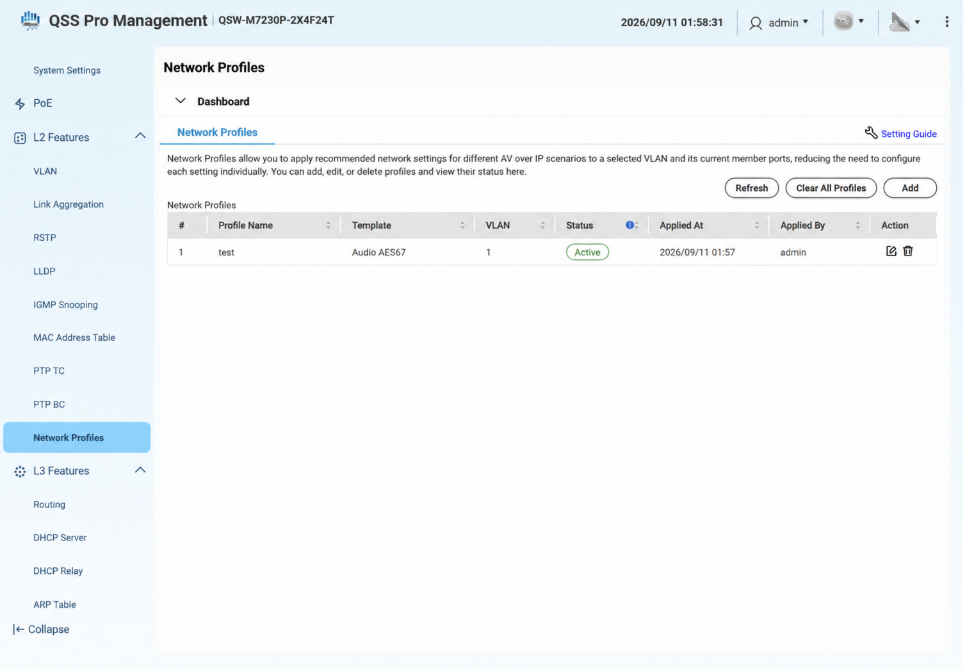
QSS 4.5.0 now supports Network Profiles for configuring AV-over-IP networks. Network Profiles provide predefined settings for AES67, Dante, NDI, Q-SYS, Audio-Technica, sACN, and Art-Net environments.
You can select a profile and the target VLAN, and then apply the related multicast, PTP, flow control, MTU, and QoS settings to the VLAN and its existing member ports. QSS also displays the profile status to indicate whether the required settings have been applied successfully.
Dual Image for firmware recovery
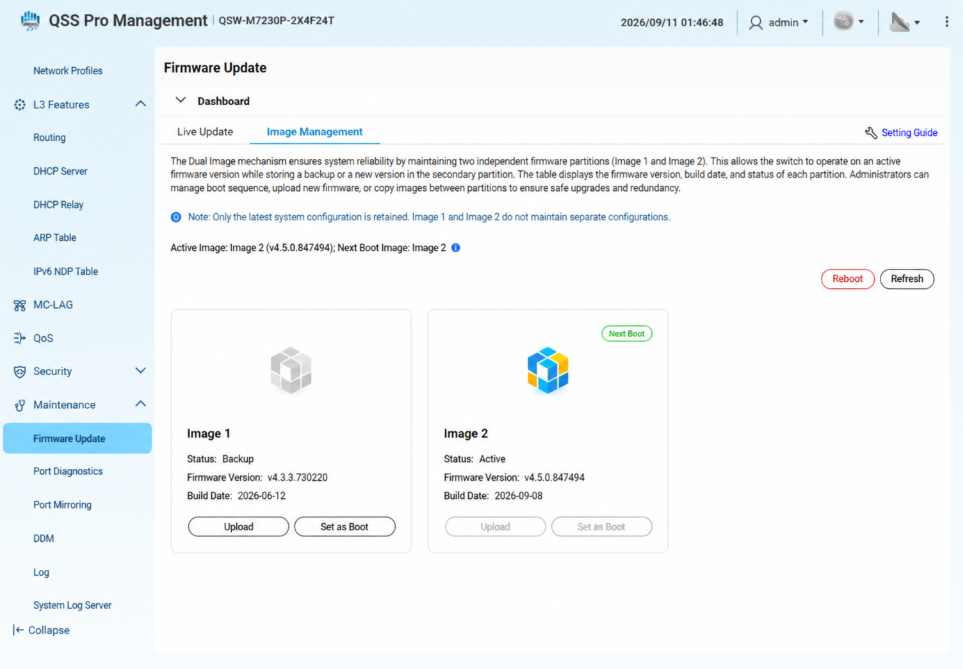
QSS 4.5.0 now supports Dual Image, which maintains two independent firmware images on the switch. You can view the currently running image, the next boot image, and the backup image, and select the image to use the next time the switch starts.
If the running firmware image cannot start correctly, the switch can start from the backup image.
Support for multiple user accounts
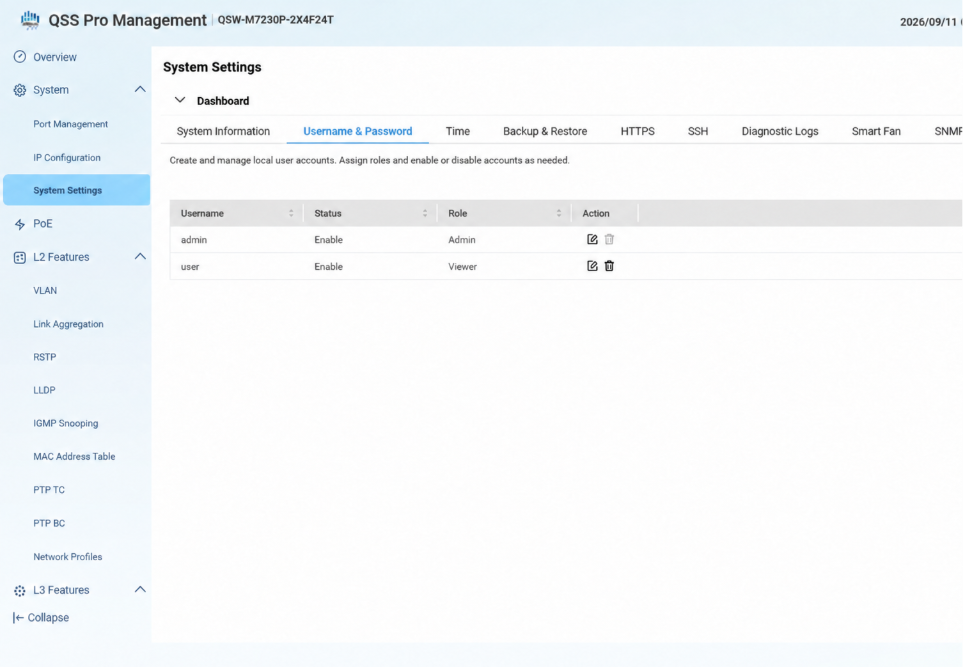
QSS 4.5.0 now supports up to 16 local user accounts. You can assign each account an Admin or Viewer role and configure its password and account status individually.
Admins can view and modify switch settings. Viewers can view switch information and settings but cannot modify the system configuration.
Support for IEEE 1588v2 PTP Boundary Clock
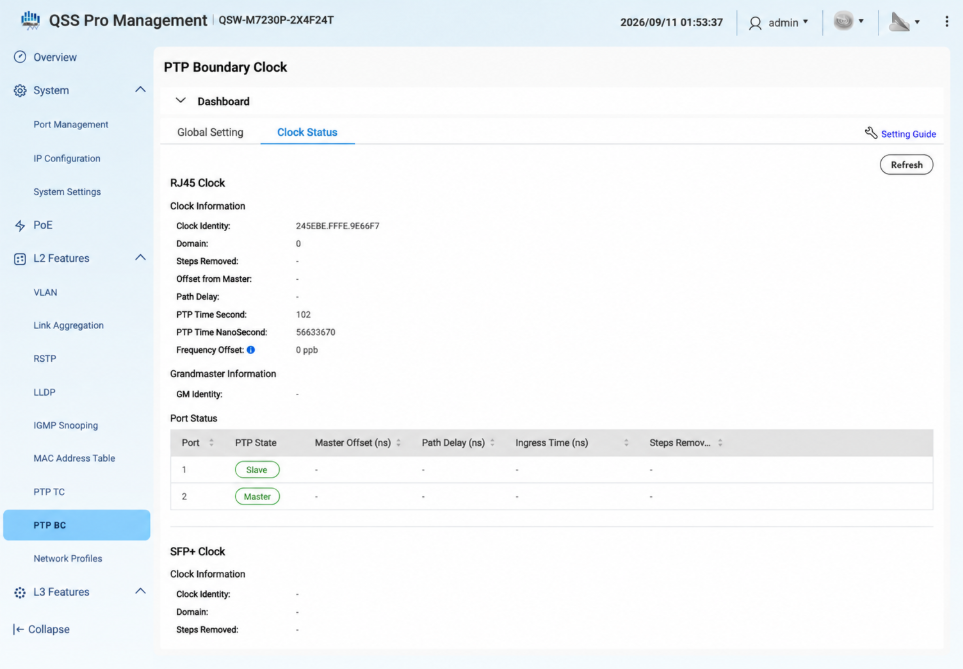
Only the QSW-M7230-2X4F24T and QSW-M7230P-2X4F24T series support IEEE 1588v2 PTP Boundary Clock. The switch uses the Best Master Clock Algorithm (BMCA) to select a clock source and can operate its ports in master or slave roles for time synchronization between connected devices.
Queue Statistics for traffic monitoring
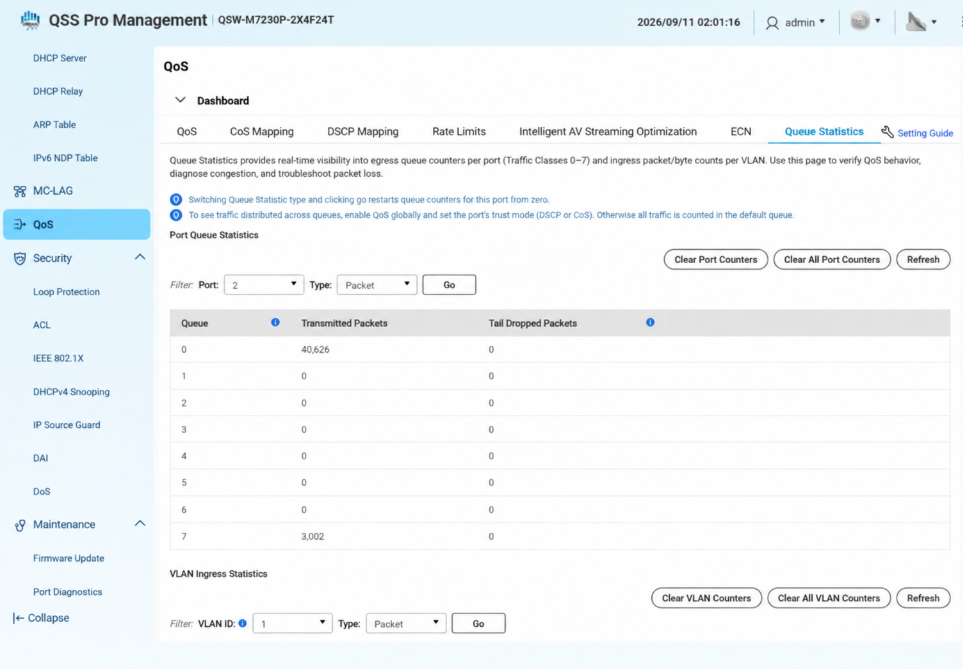
QSS 4.5.0 now provides Queue Statistics for monitoring traffic on switch ports. You can view egress packet counters for traffic classes 0 through 7 on each port, along with VLAN ingress traffic and dropped-packet counters.
You can use these statistics to check queue usage, review the results of QoS configuration, and identify where packet drops occur.
Support for DHCP Relay
Supported Layer 3 switches now support IPv4 DHCP Relay for forwarding DHCP requests between VLANs and DHCP servers. You can configure DHCP Relay for individual VLANs, specify up to eight DHCP servers, and configure how the switch handles DHCP Option 82 information.
DHCP Relay allows devices in different VLANs to obtain IP address information from centrally managed DHCP servers.
수정된 사항들
-
QSS 4.5.0 build 20260908
2026-09-10


